

Have you ever wondered why a cup of coffee or a small apartment costs twice as much in one city compared to another? If you hang around personal finance forums, online message boards, or career blogs, you will often see people mention four simple letters: HCOL. Understanding the hcol meaning is essential for anyone who wants to plan a realistic monthly budget, negotiate a fair salary, or move to a brand-new city without facing financial surprises.
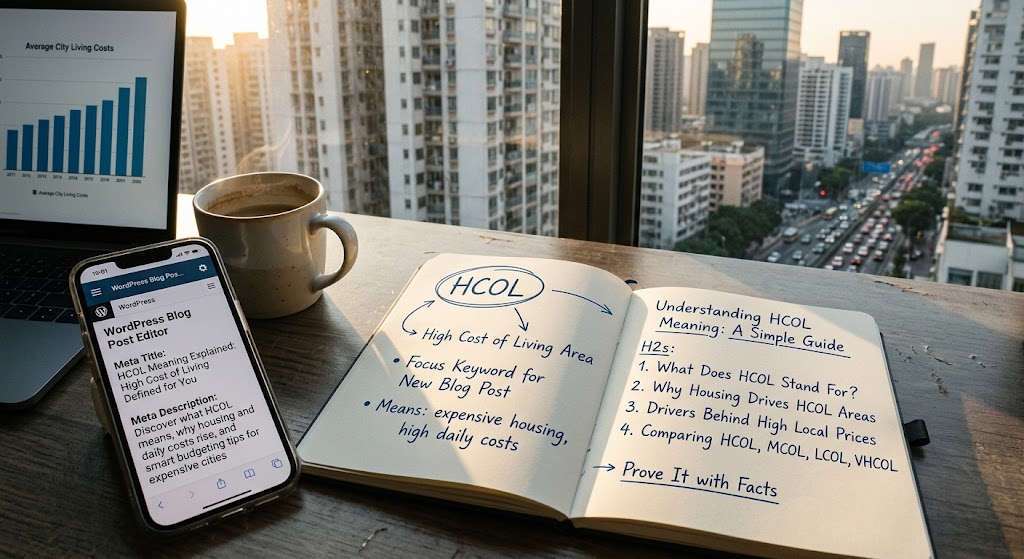
The official hcol meaning stands for High Cost of Living. It refers to any geographic area or city where basic day-to-day expenses, such as housing, food, transportation, healthcare, and local taxes, sit significantly higher than the national average. Living in an expensive destination requires careful planning, smart daily spending habits, and realistic money expectations. In this detailed guide, we will break down everything you need to know about this popular financial term, how it affects your everyday life, and how you can thrive financially even in pricey locations.
Table of Contents
Quick Summary Overview
| Feature Category | HCOL Area Characteristics |
| Primary Meaning | High Cost of Living |
| Key Cost Drivers | Expensive real estate, high property taxes, costly childcare, higher grocery prices |
| Typical Locations | Coastal metro centers, major financial hubs, popular tourist destinations |
| Salary Expectations | Generally higher base pay to match local living expenses |
| Common Alternatives | MCOL (Medium Cost of Living), LCOL (Low Cost of Living), VHCOL (Very High Cost of Living) |
| Financial Focus | Aggressive budgeting, high housing allocation, smart saving strategies |
What Does HCOL Stand For?
When people ask about the hcol meaning, they are looking at how expensive it is to maintain a basic standard of living in a specific town or city. The acronym HCOL literally stands for High Cost of Living. When an area earns this title, it means your dollar does not stretch as far as it would in a smaller town or rural community.
Every city across the country receives a cost-of-living index score. The average city scores right at 100. When a city rates well above 100 on this scale, it earns the HCOL classification. This means that relative to national averages, basic human necessities demand a larger slice of your monthly paycheck, making personal budgeting an absolute priority.
Why Housing Drives HCOL Areas
The single biggest factor that gives an area its hcol meaning is the local real estate market. Housing is usually every person’s largest monthly expense, but in expensive regions, mortgage payments and rental prices take up a much larger percentage of monthly income than standard financial rules suggest.
When land is scarce or local demand stays high, home prices skyrocket. High construction costs, strict local building regulations, and a constant influx of new residents keep property values rising rapidly. As a direct result, both monthly rent and purchase prices go up, forcing residents to dedicate a huge part of their paycheck just to keep a roof over their heads.
Primary Drivers Behind High Local Prices
While housing takes the spotlight, several other daily expenses contribute to the full hcol meaning. When an area becomes popular and crowded, almost every service and physical good becomes more expensive to store, supply, and sell.
Local businesses face high commercial rent prices and must pay higher employee wages to retain staff. To keep their store doors open and turn a profit, retail shops and service providers raise their prices. From routine dental visits and auto repairs to hair salons and gym memberships, everyday life becomes visibly more expensive across the board.
Comparing HCOL, MCOL, LCOL, and VHCOL
To truly grasp the complete hcol meaning, it helps to compare it directly against other cost-of-living tiers used by financial experts and human resources departments.
- LCOL (Low Cost of Living): Cheap housing, lower overall taxes, and affordable daily expenses, common in small rural towns.
- MCOL (Medium Cost of Living): Balanced regions near the national average where housing remains reasonably affordable for average earners.
- HCOL (High Cost of Living): Major urban centers where prices for housing, food, and fun sit well above national benchmarks.
- VHCOL (Very High Cost of Living): Top-tier global destinations with extreme prices that require top-percentile incomes to live comfortably.
How Daily Grocery and Dining Costs Increase
Food prices offer a clear example of the hcol meaning in daily life. When you walk into a grocery store in an expensive metro region, you will immediately notice that milk, produce, meats, and household staples cost noticeably more than in smaller towns.
Shipping goods into dense urban environments costs more money due to traffic delays and expensive fuel. Additionally, dining out at local restaurants comes with a premium tag because restaurant owners pay high commercial lease rates and higher wages. A basic weekday lunch that costs a small amount in a rural area can easily double in price inside a major metropolitan zone.
Transportation Costs in Pricey Cities
Transportation is another crucial piece that defines the overall hcol meaning. Whether you prefer driving your own vehicle or using public transit systems, getting around an expensive city costs extra money every month.
Gasoline prices often run high due to local taxes and regional distribution fees. Parking spaces inside downtown areas can command monthly fees equal to a cheap apartment rent in smaller towns. Auto insurance premiums also climb significantly in crowded cities due to higher accident rates and repair costs, adding steady pressure to your transportation budget.
Salary Differences and Pay Adjustments
One positive aspect tied to the hcol meaning is that job salaries are often higher in pricey regions. Companies know that living in expensive locations costs more, so they adjust their pay offers upward to attract and keep skilled workers.
When negotiating a career opportunity, human resources teams frequently offer a location-based compensation adjustment. However, it is vital to calculate whether the higher salary actually matches the elevated local expenses. Sometimes, a handsome twenty percent pay bump in an expensive area fails to cover a fifty percent jump in local rent prices.
Proven Budgeting Tips for Expensive Cities
Living in a high-cost area does not mean you are automatically doomed to financial stress. Once you understand the practical hcol meaning, you can adjust your spending habits to protect your long-term financial goals and build healthy savings.
- Track Housing Ratios: Try to keep your total housing expenses close to thirty percent of your net income, using roommates if necessary.
- Embrace Public Transit: Reduce car payments, parking fees, and insurance costs by taking advantage of local trains and buses.
- Cook at Home: Prepare meals at home often and view dining out as a special treat rather than a daily routine.
- Automate Savings: Move money automatically into high-yield savings accounts on payday before you spend it on unnecessary lifestyle upgrades.
Is Living in an HCOL Region Worth It?
Now that you fully understand the hcol meaning, you might wonder why millions of people choose to live in these pricey locations. Despite the financial pressure, expensive cities offer unique life advantages that attract people from all over the globe.
High-cost cities frequently feature thriving job markets, top-rated hospitals, world-class dining, rich cultural events, and easy networking opportunities. For ambitious professionals, creative artists, and energetic entrepreneurs, the high entry cost pays off through rapid career growth, higher lifetime earning potential, and vibrant lifestyle experiences that smaller towns simply cannot duplicate.
Smart Ways to Transition Out of High-Cost Areas
If living in an expensive city begins to drain your energy and wallet, you can use your understanding of the hcol meaning to plan a smooth transition to a more affordable location.
Many professionals build their career experience inside competitive high-cost markets, save up money, and then leverage remote work options to move to lower-cost areas. Moving your existing income or savings into an MCOL or LCOL region instantly increases your purchasing power, allowing you to buy larger homes, boost retirement savings, and enjoy a lower-stress financial lifestyle.
Practical Takeaways for Your Financial Journey
Understanding the full hcol meaning gives you complete control over your career choices, moving plans, and daily spending habits. Living in a High Cost of Living city requires clear priorities, realistic budgeting, and smart lifestyle decisions. By balancing high housing costs with disciplined money management, you can build a successful future in any city you choose.
Whether you decide to stay in a bustling expensive metropolis or relocate to a quieter, budget-friendly town, matching your earnings to your location’s true cost of living is the ultimate key to lasting peace of mind.
Frequently Asked Questions (FAQs)
What is the exact HCOL meaning in simple terms?
The hcol meaning stands for High Cost of Living. It describes a city or region where basic daily expenses—such as rent, groceries, transportation, and medical care—are noticeably higher than the national average.
How do I know if my city is considered an HCOL area?
If your city has a cost-of-living index score well above 100, high average rent prices, expensive local services, and elevated local taxes, it qualifies as an HCOL region.
Does a higher salary in an HCOL city make up for expensive prices?
Sometimes, but not always. While companies offer higher compensation to cover living expenses, you must compare the pay increase directly against local housing and tax rates to see if your real purchasing power actually improves.
What is the primary difference between HCOL and VHCOL?
HCOL stands for High Cost of Living, while VHCOL stands for Very High Cost of Living. VHCOL regions are elite global cities with extreme housing prices that sit far above standard HCOL markets.
Can you build savings while living in an HCOL location?
Yes, you can build wealth in expensive cities by managing housing costs with roommates, avoiding unnecessary debt, cutting transportation expenses, and automatically putting money into savings every payday.
Is MCOL better than HCOL for remote workers?
For many remote workers, moving from an HCOL area to an MCOL (Medium Cost of Living) area works great because it lowers housing and daily expenses while keeping a strong, competitive salary intact.
